Wedding Flowers: Who Needs Them?
Wedding flowers are present at every step of the proceedings, not always in grand fashion, but in smaller ways. They are present at the ceremony site, setting the backdrop for the vows. Down the aisle, the flowers are there to guide the way, not demanding attention. By the time the reception rolls around, the flowers have shifted and are now centerpieces, adorning the wedding cake, or in the corner of the room that might otherwise have looked bare.
They don’t need to be present, although in many cases, they are. This is not just the bouquet, of course, but the flowers for the people closest to the ceremony. Weddings carry a lot of “expected” elements, and flowers sit somewhere near the top of that list.
This article walks through who needs wedding flowers, what roles typically include them, and how to decide what actually makes sense for your day.
Why Flowers Are Important in Weddings
Flowers tend to do more than fill space. They soften edges, add movement, and bring a kind of quiet cohesion that’s hard to replicate with other décor.
At the same time, their importance isn’t always emotional. Sometimes it comes down to visual balance, how they soften the space and keep everything from feeling too structured.
- A dress feels complete with a bouquet.
- A ceremony space feels defined with even minimal wedding ceremony flowers.
Remove them, and things can start to feel slightly unfinished, though not always in a bad way. That’s usually where the real conversation around who actually needs wedding flowers begins, less about rules, more about what feels right for the day.
Who Traditionally Needs Wedding Flowers?
The Bride
This one rarely changes. The bridal bouquet is often the centerpiece of all wedding flower arrangements.
Even couples who skip most décor tend to keep this. It gives the bride something to hold, something to do with her hands during photos, and it anchors the look. Without it, the absence is noticeable in a way people don’t always expect.
Still, there are exceptions. Some brides prefer alternatives, like a single flower, a lantern, or nothing at all. And then, in those moments, nothing seems to be missing, only different.
Maid or Matron of Honor
The maid or matron of honor usually carries a smaller bouquet. It mirrors the bride’s but doesn’t compete with it.
There’s a practical side to this. It creates consistency in photos. It also avoids the awkward moment when one person in the group has something to hold, while everyone else doesn’t.
Though in smaller weddings, this can shift. Sometimes only the bride has flowers, and that contrast works just fine.
Flower Girl
Flower girls tend to get the most flexibility: petals, small baskets, tiny bouquets, or even floral crowns.
It’s one of those roles where tradition exists, but no one feels strongly about sticking to it. Some couples skip it altogether, while others lean into it fully.
Parents and Grandparents
Corsages and boutonnieres come into play here.
They’re subtle, but they signal inclusion. A small detail that says, “you’re part of this.” Not everyone chooses to include them, especially in more casual settings, but when they’re there, they feel meaningful.
Groom and Groomsmen
Boutonnieres are standard for the groom and groomsmen. They are simple, understated, and often tie back to the overall floral palette without drawing too much attention.
There’s a tendency to overlook these when considering who needs wedding flowers, but they tie everything visually. Without them, the contrast between both sides of the wedding party can feel slightly off.
Wedding Ceremony Flowers
Ceremony florals don’t need to be elaborate to work. A few well-placed arrangements can shape the entire space, an arch that frames the moment, a couple of aisle markers, something simple near the altar that quietly pulls everything together.
That’s usually enough.
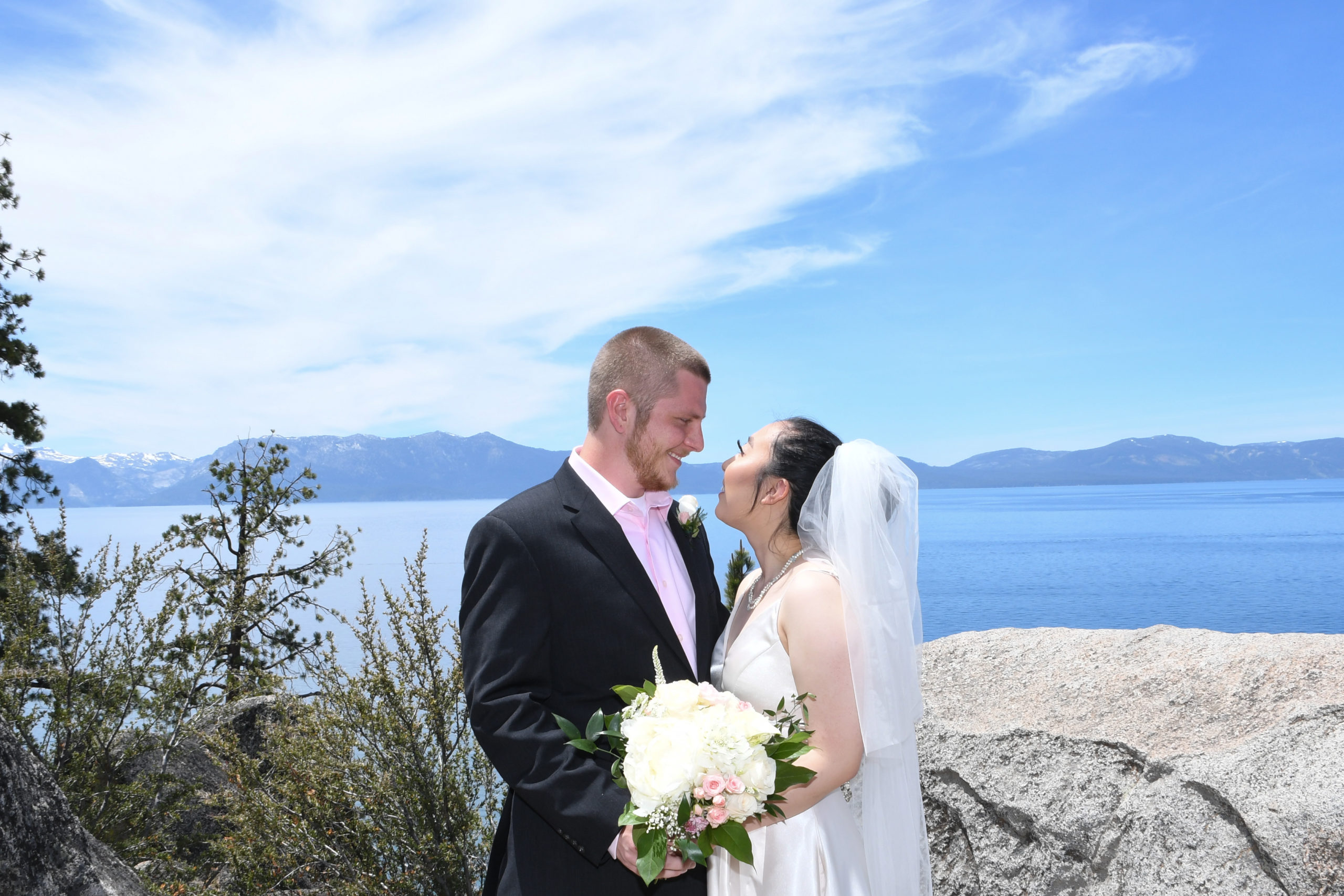
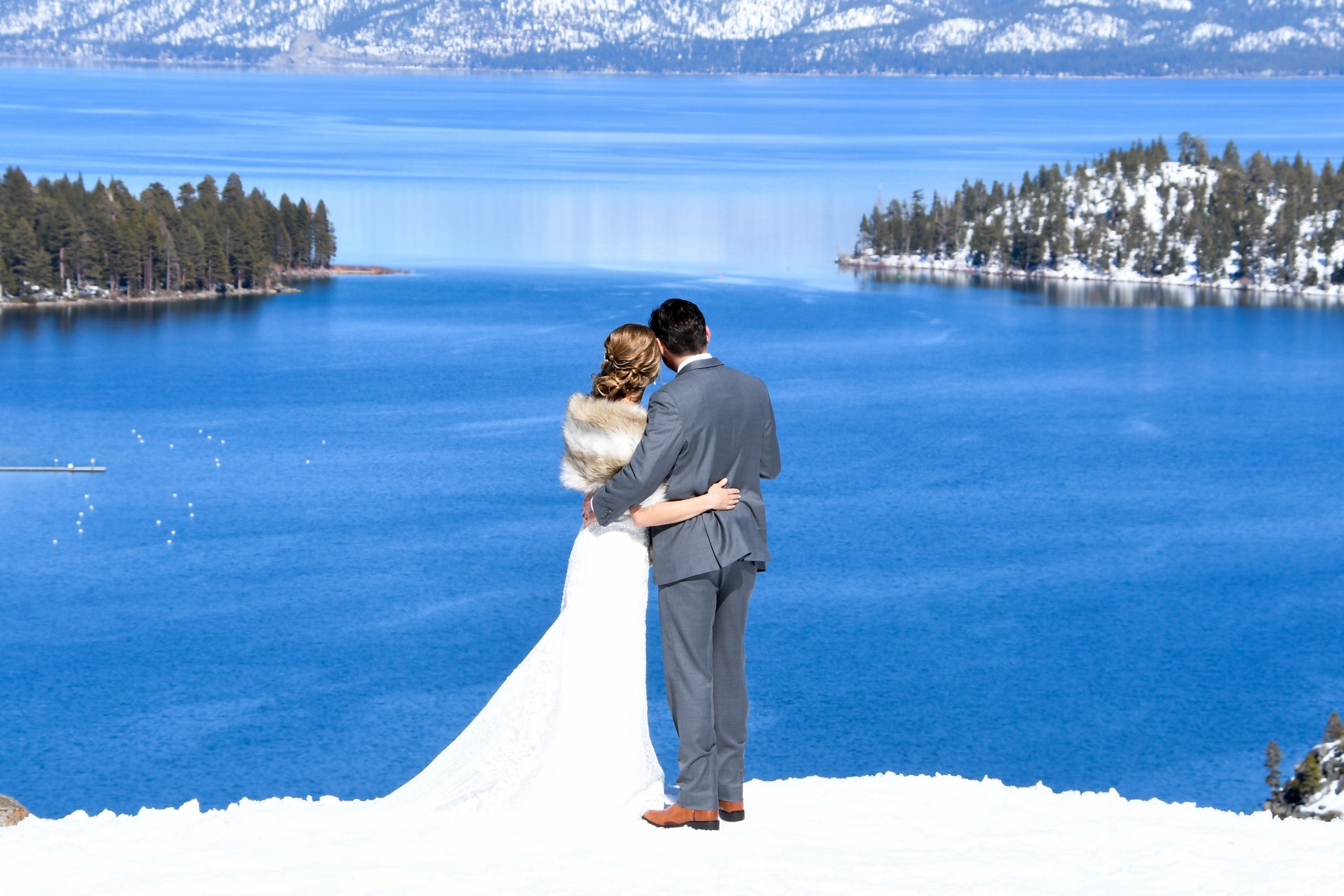
In outdoor settings, especially at a Lake Tahoe wedding, the environment already does much of the work. The mountains, the water, and the light all come together on their own. There’s no real need to compete with it. A lighter touch tends to sit more naturally in that kind of setting.
Still, some couples prefer fuller wedding ceremony flowers, especially if they want a more structured or formal look.
Wedding Reception Flowers
Reception flowers tend to move away from structure and settle into the overall atmosphere of the space. Centerpieces become the focal point, though they don’t have to be large or dramatic to make an impact. In many cases, smaller arrangements feel more comfortable on the table, leaving room for conversation and avoiding that slightly crowded feeling larger pieces can create.
From there, the details begin to build gradually. Flowers appear on the cake, along the bar, and across entry tables, each placement adding a subtle layer without overwhelming the setting. Nothing stands out too strongly on its own, but together they shape how the reception feels.
Over time, these choices start to accumulate, and that’s often how reception florals take up a larger portion of the budget. It’s rarely a single decision that leads to it, but a series of small additions that come together almost without noticing.
Do All Weddings Need Flowers?
The short answer is no.
The longer answer comes down to what you want your wedding to feel like. Some weddings feel complete with very few flowers, or none at all, while others lean on them more to hold everything together visually. There isn’t a single way to approach it.
That’s usually where the question of who needs wedding flowers leads. Once certain elements are stripped back, the structure of a wedding starts to feel more flexible than expected.
At the same time, skipping flowers entirely does shift the tone. It can feel more modern, sometimes more understated, for some couples, which fits perfectly. For others, it leaves a slight sense that something is missing, even if it’s hard to put into words.
How to Choose the Right Wedding Flowers
Match Your Wedding Theme
Your flowers should align with the overall style of the wedding.
Loose, organic arrangements tend to sit naturally in outdoor settings, while more structured designs lean toward a formal look. Mixing the two can work, though it usually needs a bit of intention to keep everything feeling cohesive.
Consider the Season
Seasonality affects both availability and cost.
Choosing flowers that naturally bloom during your wedding season usually results in better quality and fewer complications. It also tends to feel more cohesive, though guests don’t consciously notice.
Think About Venue Style
The venue plays a bigger role than most people expect.
For Tahoe weddings, the setting tends to carry much of the visual weight on its own. Adding too many florals can start to feel unnecessary. A lighter approach usually sits more naturally within the space.
Indoor venues, on the other hand, sometimes require more decoration to achieve the same atmosphere.
Set a Floral Budget
This is where decisions become clearer.
Florals can scale up quickly. Once you start adding multiple wedding flower arrangements, the cost builds in ways that aren’t always obvious at first.
Setting a budget early helps define priorities. Maybe the bouquet carries the most weight. Maybe it’s the ceremony space that matters more. Everything else starts to feel a bit more optional.
Tips for Saving Money on Wedding Flowers
Not every wedding needs an extensive floral plan.
You can reuse ceremony arrangements at the reception. Bridesmaid bouquets can double as centerpieces. Choosing greenery-heavy designs often reduces costs without sacrificing the overall look.
Another option is scaling back selectively. Keep flowers where they’re most visible, and simplify everything else.
It’s a practical way to approach who needs wedding flowers without feeling like you’re cutting corners.
Planning Your Wedding with High Mountain Weddings
Planning a wedding in a mountain setting comes with its own rhythm, a pace that feels a little more grounded, a little less forced.
At High Mountain Weddings, our approach often leans toward working with the environment rather than reshaping it. This naturally shifts how floral choices come together. Couples tend to choose fewer pieces, but with more intention behind each one.
In some cases, it’s just a bouquet and a few ceremony arrangements. In others, the details build out a bit more. There isn’t a fixed template guiding it.
What matters is that the choices feel aligned with the setting, not layered on top of it.
Conclusion
Flowers hold a unique place in weddings. They’re traditional, though not required. Expected in many ways, yet still open to interpretation.
As you start working through who actually needs wedding flowers, the structure begins to take shape. Some roles feel incomplete without them, while others can shift depending on the style of the day.
There’s no strict rulebook here. Just a series of choices that slowly define how everything comes together.
Planning a wedding in the mountains brings its own set of choices, and flowers are just one part of it. At High Mountain Weddings, our goal is to keep things clear, manageable, and true to your vision.
If you’re working through details or still unsure where to start, call us at (530) 318 1722, and you’ll get straightforward guidance that helps shape a day that actually feels like yours.
FAQs
Who usually gets flowers at a wedding?
Typically, the bride, bridesmaids, flower girl, parents, and the groom’s party receive some form of floral element. This can vary based on the scale and style of the wedding.
Do groomsmen need flowers?
They usually wear boutonnieres. It’s a small detail, though it helps maintain visual consistency across the wedding party.
Are wedding flowers required?
No. Many weddings scale back or skip them entirely. It depends on the overall vision.
How much do wedding flowers usually cost?
Costs vary widely. Smaller weddings might spend a modest amount, while larger events with extensive décor can see significantly higher budgets.
Can outdoor weddings use fewer flowers?
Yes, especially in scenic locations. Natural surroundings often reduce the need for heavy decoration.
When should couples order wedding flowers?
Most couples finalize floral plans a few months before the wedding. Booking earlier helps secure preferred vendors.
Leave a reply
Thinking Of Eloping To South Lake Tahoe? We’re Here To Help You!
Your first thought might be ‘eloping’? Is that really possible? Is it possible to

Reasons To Elope With Your Better Half .
This might just be the first time you’re hearing about this. If you are
LAKE TAHOE WEDDING CHECKLIST: YOUR BIG DAY AT LAKE TAHOE
wedding album, you exclaim, "It was the most enchanting day you ever experienced." You may
12 Must-Haves For The Romantic & Coziest Lake Tahoe Winter Wedding
A snowy wedding is the one that is the best thing to add to